

Along with most 70-year-olds, I began writing a memoir three years ago. Called “Our Story,” I envisaged a readership of one, my son. I expected to write in a humorous style, engaging, deft, clever wordsmithing that would leave my reader enthralled, wanting to know more. I would be meticulously truthful, careful not to edit the poor mistakes I made in my life, bad behaviour and lessons learned. I would focus on human stories and narrative not historical content. Our Story would be less about dates and chronology and more about the human condition. The book would also unpack the genetic influences on my life, explaining some of those poor decisions I made and excuse some of my poor parenting! I thought this book would detail the lives of other inhabitants of our family tree. Three years ago, I planned to have the book finished in 6 months!
Three years later, the first draft of “Our Story,” is finished, and the second draft is half finished. At 80,000 words it is still growing and changing shape. More than the actual product, the book, I have learned so much about the process of memoir writing. I can confidently say that nearly every assumption that I made three years ago about writing this book, was incorrect.
” A memoir is my version of events. My perspective. I choose what to tell and what to omit. I choose the adjectives to describe this situation, and in that sense, I am creating a form of fiction.” Isabel Allende
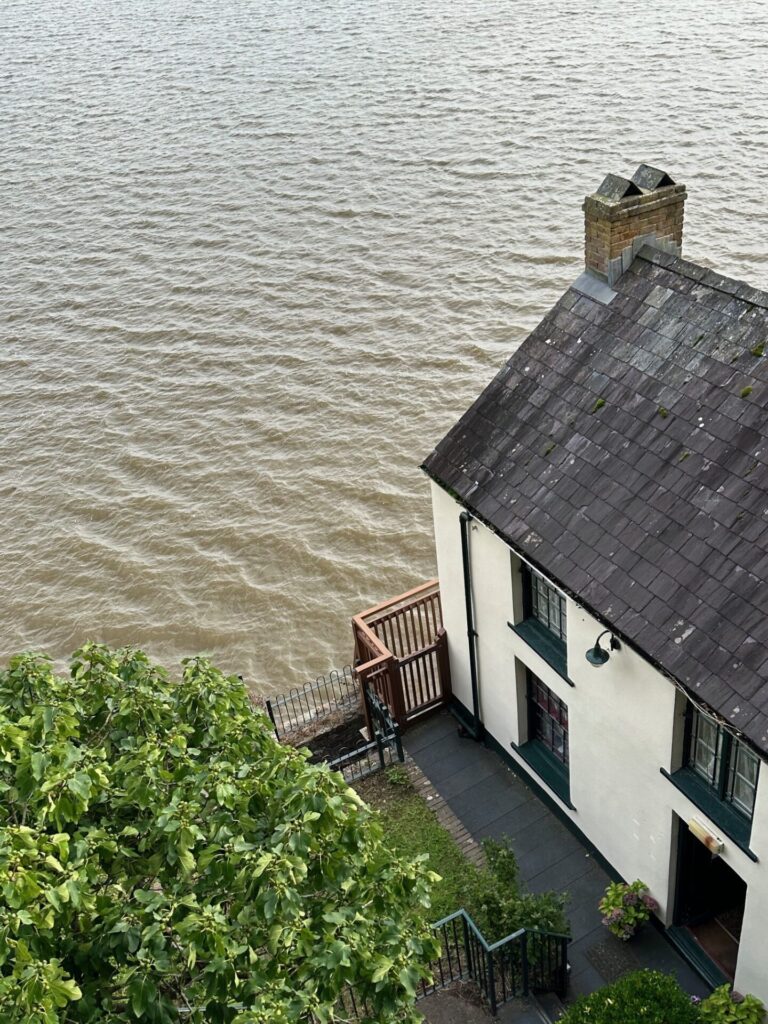
Dylan Thomas’s Writing Studio in Wales
Here’s what I’ve learned about writing a memoir so far…….
- Dedicated Space, Dedicated Time
You probably don’t have the luxury of a lakeside cottage, like Dylan Thomas, to use as a dedicated writing space. I found that my writing space didn’t need a big view, but it did need space to organise papers, photographs, documents and folders of reference material. If you’re writing about decades past, birth, death and marriage certificates, letters, school reports, job references, certificates, love letters, war records, photographs are all paper based. I organised all these materials into folders relevant to each chapter of the book. I have taken over the guest bedroom as my writing space and the bed is a great filing space for each of my chapter folders.
I write best in 2 shifts and consistently. I write 5 days a week. It’s like a job that I go to. My morning shift usually goes from 9 am -1pm with a coffee break and 30-minute walk at 10.30am. Then I write from 4-6pm. A standing desk or your phone alarm set for each hour reminds you to move. Sitting for hours on end is a killer!
2. Find Some Critical Friends
Writing is a lonely business and connecting with others around your work is important. I met a group of women at a writers’ workshop in Scotland, three years ago. Our ” Literary Lasses” group meets by Zoom 4 times a year and we send chapters to each other for review and comment. A high degree of respect and trust has developed among group members. Identifying as Writers is a major step in approaching the work of writing. You may not be published authors, but you can be writers. I also have friends who have self – published their work and their experience and contacts have been very helpful. A proof reader and book designer will work on my manuscript when its finished and I’ll self – publish a run of 100 copies to begin with.

3. To plan or not to plan , that is the question!
I found it useful to map out the skeleton of the book on a small, portable white board. Then as you write you find one chapter carries too much content or you need to add detail to an event. You create new chapters and structures. The whiteboard keeps track of key content in each chapter and the overall structure of the book.
4. Who is your audience?
My audience of one soon became an audience of many. Relatives and friends soon said ” Can we have a copy?” Writing for many has actually made the task of writing easier. I’m not so hardwired into ” What will my son think if I say this…” I now say… If I was reading this book, would this be interesting? What else would I want to know? People talk about the act of writing a memoir as ” Processing” past events or some sort of catharsis aided by exploring memories.
After 3 years of writing this book, I know sometimes when ” My Truth” became too deep, dark and analytical I had to stop and think…In 10 years time does my granddaughter really want to read this self- flagellation? Save it for therapy!
5. Writing my story not your story
Melinda French Gates in her recent memoir, made the point that she is writing her story and it was up to her husband, Bill Gates to tell his. One of the problems with family history is how far back do you go? Who do you include or leave out? Where are the boundaries of this book? Like Melinda French Gates I came down on the side of, this is my story to tell. If this person is an important part of the story I’ll include what I know. My narrative is shaped by my knowledge, interpretation and understanding of events. Am I writing a Family History or a Memoir? I think this is an important distinction.
6. Context matters
Research for this book has been one of the most interesting aspects of writing. For example, understanding why my parents decided to leave England took me into research about the coal industry in the UK in the 1950’s. Researching TV programming in the 1950’s was fascinating. Wait until my grandchildren know that in granny’s time in England, there was one TV channel that, aired from 4.30-6pm and there were no programs 6-7pm because this was bedtime for children and parents would be busy. Why did this happen? is a key research question.
As we age we often use grand notions like Legacy. What will you leave behind? For my family and interested friends I will leave stories, told in my simple conversational style. Not trying to be a literary great or charm or impress. The stories of my life and those who were players in this sometimes comic, sometimes tragic tale are all I have to give – and that is enough.
Personally, writing this memoir has been mostly joyful, at times traumatic but always has given me a deeper understanding of my life. T.S. Eliot says it best
” We shall not cease from exploration, and at the end of our exploring, will be to arrive where we started- and know the place for the first time.”
Words by Nora Vitins with images by Pixabay, Suzehaz and Nora