It was my birthday this month. While I attend more funerals than parties at this age, (77) I vowed to celebrate my birthday as a week long festa of lunches, events, excursions and frolicking. It was an action packed week; plays, lunches, exhibitions, new bars, family times, bookshops, coffee with friends, and then….the Crash…. this old body staggered back to the beach after a week of city living, soul tired, peopled out and needing solitude.
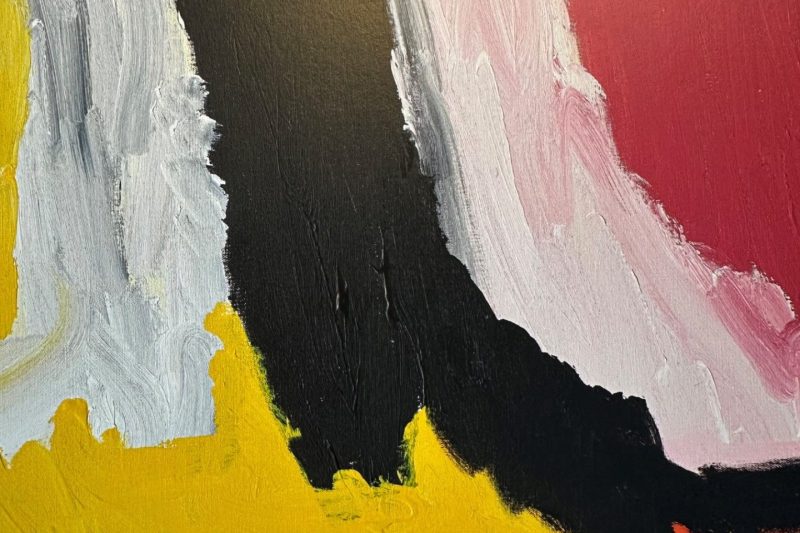
But in my hand was a gift I had chosen when a kind friend gave me a book voucher. It’s an art book about the paintings and life of an indigenous artist, Sally Gabori. I guess you’d call it a coffee table book. Big, heavy, impressive. But it’s not at all the type of book you flip through mindlessly. This book explodes with colour, energy, audacity and a life force that feels unstoppable. Along with images of her work, there are detailed explanations of her life, culture, language and influences which I found fascinating.
When did she start painting? At the age of 81! Yes that’s right. With no formal art training she started painting at the age of 81. Sally and her husband Pat Gabori were living in an aged care hostel on Mornington Island at the time. A talented weaver, she attended the Mornington Island Arts and Crafts Centre. It was here she was offered paints for the first time at a workshop in 2005. Over the next 10 years until her death in 2015 she produced over 2,000 paintings. Gabori represented Australia in the 55th Venice Biennale of 2013 and her works are held in the permanent collections of Musee du Quai Branly in Paris and many Australian galleries and private collections.
Who was this extraordinary woman? Her story is truly remarkable.
Mirdidingkingathi Juwarnda Sally Gabori (c 1924-2015), a Kaiadit woman, was born on Bentinck Island in the Gulf of Carpentaria, Australia. She was one of only 9 speakers of the Kayardilt language, 7 of whom were women. Here she lived a traditional life gathering food including shellfish from the complex system of stone fish traps her people had built in the shallows around the island. it was on this tiny island, measuring only 20km from east to west and 12kms from north to south, that she developed an intimate knowledge of the salt-water environment, fishing, weaving, cosmology and cultural practices.
Complex networks of kinship meant that these peoples were not nomadic. A man might marry more than a dozen wives and child rearing was a shared responsibility among the wives. Sally Gabori was born on the beach and a dolphin was her conception totem. Her father had nine children from three wives. She grew to womanhood in this very traditional setting. In her 20’s she became the 4th co-wife of Pat Gabori.
The Kaiadilt physical world is largely a flat setting, divided into blocks of colour by sharp boundaries, the colour of each block modulated by the time of day. Founding stories tell of the Rainbow serpent plunging to the ground and leaving his scales as shadows on the multi-coloured rocks found on the foreshore. When you look at Gabori’s bold use of colour in her massive paintings, these stories are bought to life.
In 1948, a cyclone and high seas contaminated the fresh water supplies on the island and all 63 Kaiadilt residents, including newly married Sally Gabori, were evacuated to a Presbyterian mission on Mornington Island severing the practice of culture and ties on Country. They were in exile and for the first time came into contact with a strong European influence. Children were separated from their parents in mission dormitories, were told to speak English and were punished for speaking their own language. A deep sense of rootlessness and sadness resulted and it wasn’t until the 1990’s that the Kaiadilt received recognition of their links to the land and sea on Bentinck Island. An outstation was established there and some of the elders returned, but there was no school nor medical facilities. It was also funded by government grants that expired. The outstation did not last as many original inhabitants were now in their 70’s and needed medical support.
In exile, Sally Gabori spent her first years as a mother. Her first 3 children all perished in infancy (1948,1949, 1950). In 1953 her daughter Madge was born and survived. After that, Sally had another 7 children. The only concept of ” rich” among the Kaiadilt people was to describe someone blessed with children.
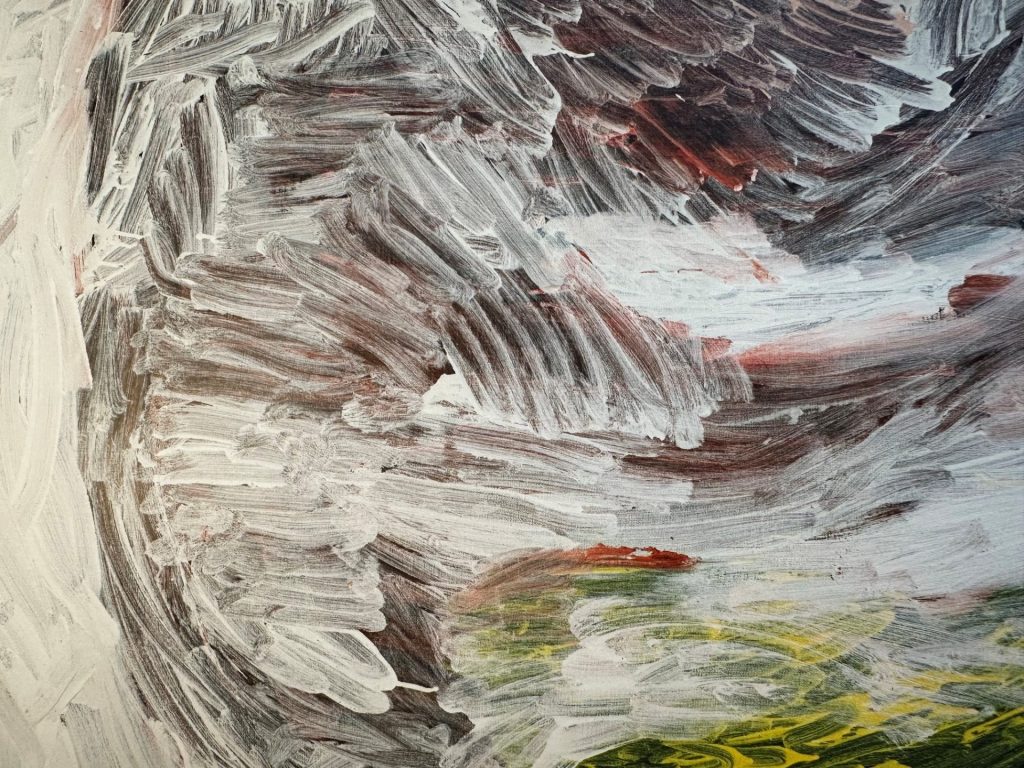
Sixty years after her removal from Bentinck Island and now in her 80’s, Sally Gabori started painting in acrylics on canvas at the local art centre. She began painting spontaneously, compulsively asking for larger canvases and spending five days a week at her work, every moment the arts centre was open. Other indigenous artists embraced the ochre, earth colours, dot painting and the Western desert art of the Papunya region. Sally drew on the distinct colour layering and topography of the country she knew in her childhood on Bentinck island. The vibrancy, energy and power of her work was engaging and the art world took note. Often she finished her painting in a day but by 2011, with her stamina decreasing she worked with a new technique of layering a white opaque brush strokes over a layer of darker colour, providing 2 distinct layers of energy.
On the massive wall canvases her daughters would help her complete the works in later years.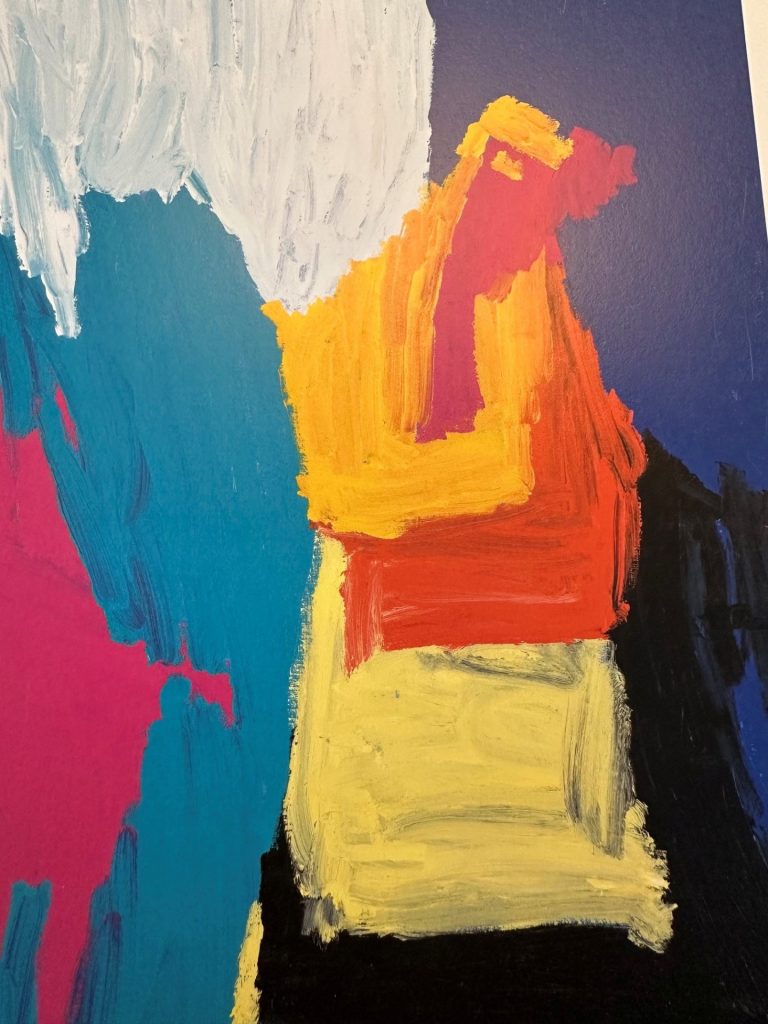
“From the time of her encounter with brush, acrylic and canvas, during the 9th decade of her life, Sally Gabori was compelled to paint, driven by a sense of having nothing to lose: it gave meaning and purpose to her existence in the diaspora. Her art is an organic, uninterrupted love letter to country.” Judith Ryan
Sally Mirdidingkingathi Juwarnda Gabori-Fondation Cartier pour l”art contemporain
Contributors- Nicholas Evans, Judith Ryan, and Bruce Johnson McLean